19 Oct 2026
How Fan Sentiment Metrics Drive Adjustments in Live Athletic Wagering Lines
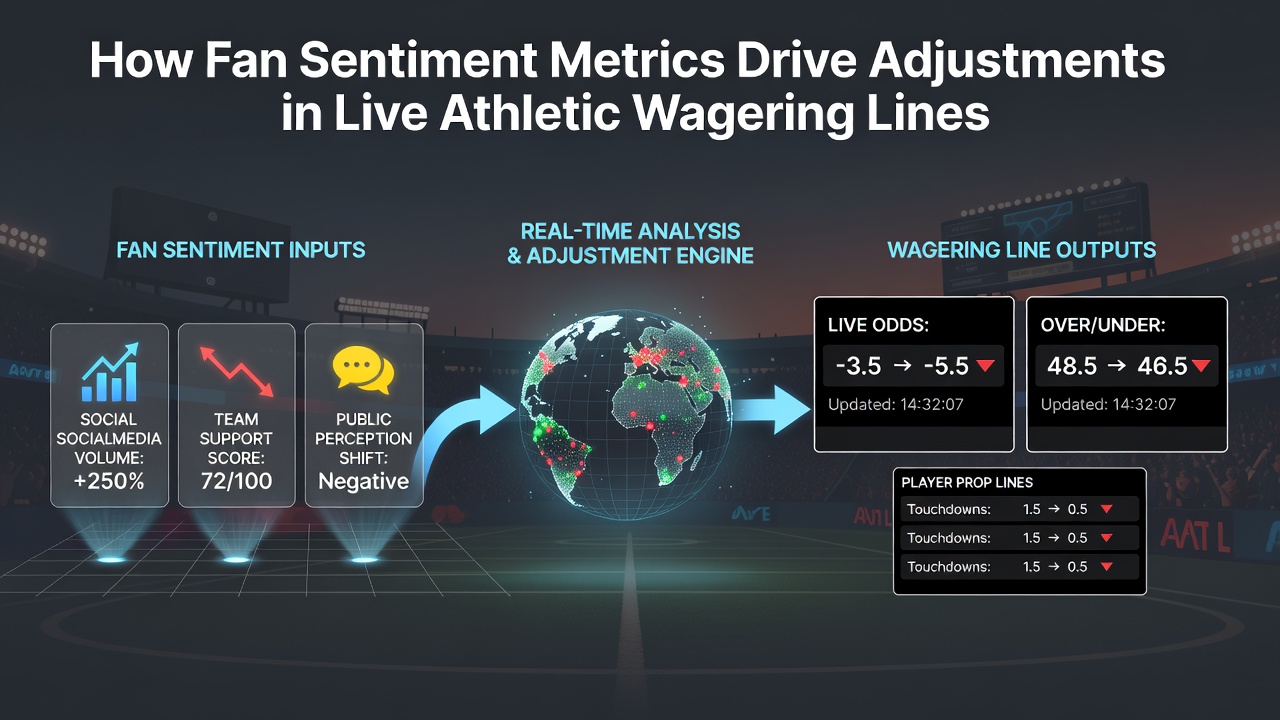
Live athletic wagering lines shift constantly during events, and fan sentiment metrics provide one key input that operators monitor to maintain balanced books. These metrics aggregate public expressions from social platforms, search trends, and betting activity patterns, allowing adjustments that reflect collective interest levels rather than static pregame models alone. Operators track volume and tone across multiple channels because rapid changes in expressed preferences can signal potential imbalances in betting action before those patterns fully appear in the numbers.
Data Sources Behind Sentiment Tracking
Bookmakers pull information from social media APIs, news aggregators, and proprietary betting interfaces to build sentiment scores that update in real time. In October 2026, major league baseball playoff games demonstrated how spikes in positive mentions for certain teams correlated with heavier public wagering on those sides, prompting line movements within minutes of the surges. Researchers have documented similar patterns across basketball and soccer, where sentiment spikes often precede or coincide with line adjustments of half a point or more.
Algorithms process language for positive or negative valence while also measuring overall mention volume relative to historical baselines. When a player receives unusually high positive attention during a game, the corresponding player prop lines frequently tighten or shift to discourage additional public bets on that outcome. This process operates continuously because the data streams never pause during live play.
Integration With Traditional Odds Models
Sentiment data supplements rather than replaces core statistical models that rely on player performance histories and situational factors. Operators combine both inputs through weighted systems that give sentiment higher influence during periods of high social engagement, such as nationally televised contests or rivalry matchups. The result appears in live lines that move even when on-field statistics remain stable, reflecting external pressure from bettor interest rather than game events alone.
Examples From Recent Seasons
One documented case involved a National Football League primetime game where early sentiment metrics showed overwhelming support for the home team despite a statistically even matchup. Lines adjusted accordingly within the first quarter, moving the spread by a full point before any scoring occurred. Observers note that similar adjustments occurred in European soccer leagues when viral moments on social platforms drove sudden interest in underdog outcomes.
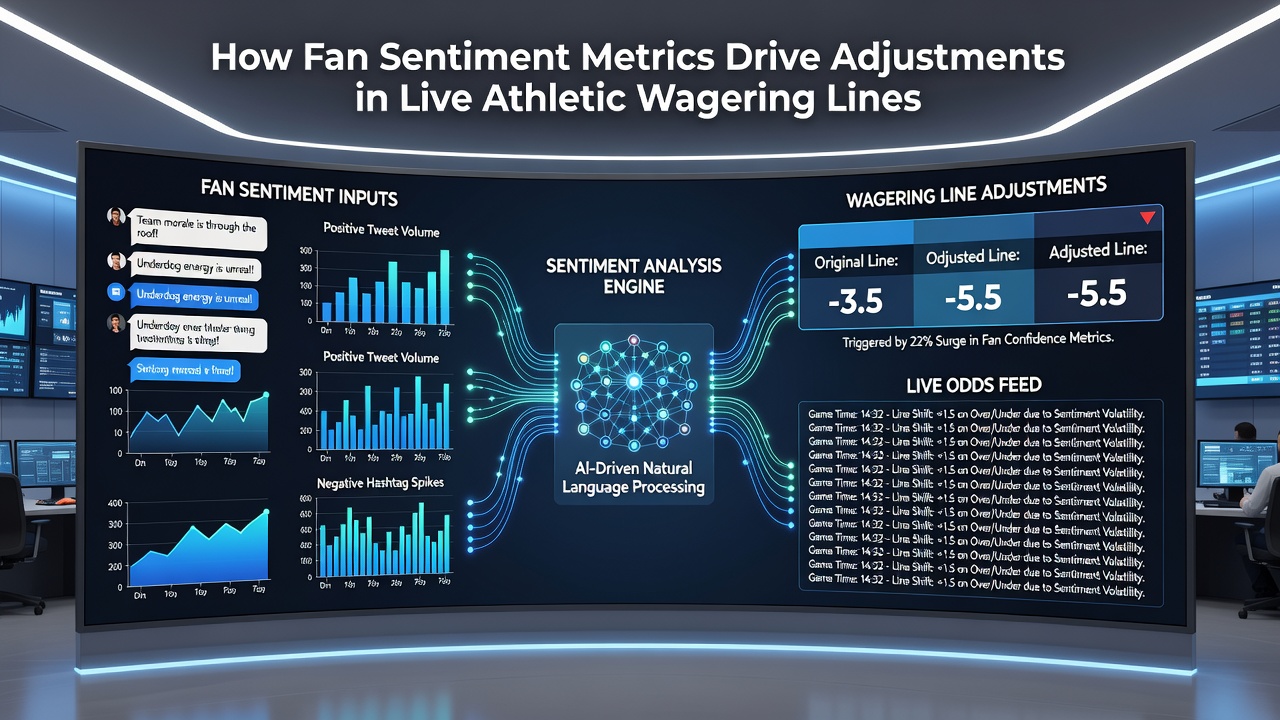
These shifts help operators manage liability because public betting often clusters around popular narratives amplified through media. When sentiment metrics indicate concentrated interest, lines move to encourage action on the opposite side or to reduce maximum wager sizes on the favored outcome. Data from multiple operators shows that incorporating sentiment reduced exposure during volatile live periods compared with models relying solely on in-game statistics.
Regulatory and Industry Context
Gaming authorities in various regions require operators to maintain transparent risk management practices, and sentiment integration falls under those broader compliance frameworks. The American Gaming Association has published reports on evolving risk tools, including social data usage. In Australia, the Victorian Commission for Gambling and Liquor Regulation monitors how operators respond to market signals, though specific sentiment methodologies remain proprietary. Academic studies from institutions such as the University of Nevada, Las Vegas, have examined correlations between social volume and line volatility, finding measurable relationships during high-profile events.
Operators adjust thresholds dynamically because sentiment reliability varies by sport, time of day, and event type. Low-attention midweek games generate weaker signals than championship contests, so models assign lower weights accordingly. This calibration prevents overreaction to isolated social spikes that lack corresponding betting volume.
Conclusion
Fan sentiment metrics have become a standard component of live wagering systems because they capture public interest patterns that traditional statistics alone do not fully reflect. Operators continue to refine these tools as data sources expand and processing speeds increase, resulting in more responsive line movements during events. The approach balances statistical foundations with real-time external indicators to support market stability across different sports and regions.